Industrial air treatment / Odor control

We control
the invisible.

Engineered systems that capture or transform odor-causing compounds before they become an operational, environmental or community concern.

Scroll to explore
02

Purpose-built
technologies

100–2,500

CFM standard
product range

SS304

Standard enclosure
SS316 available

S1

Continuous-duty
operation

The systems

One challenge.
Two precise responses.

System selection starts with the air itself: contaminant profile, flow, variability, access and operating priorities. ANBE configures the treatment path around those conditions.

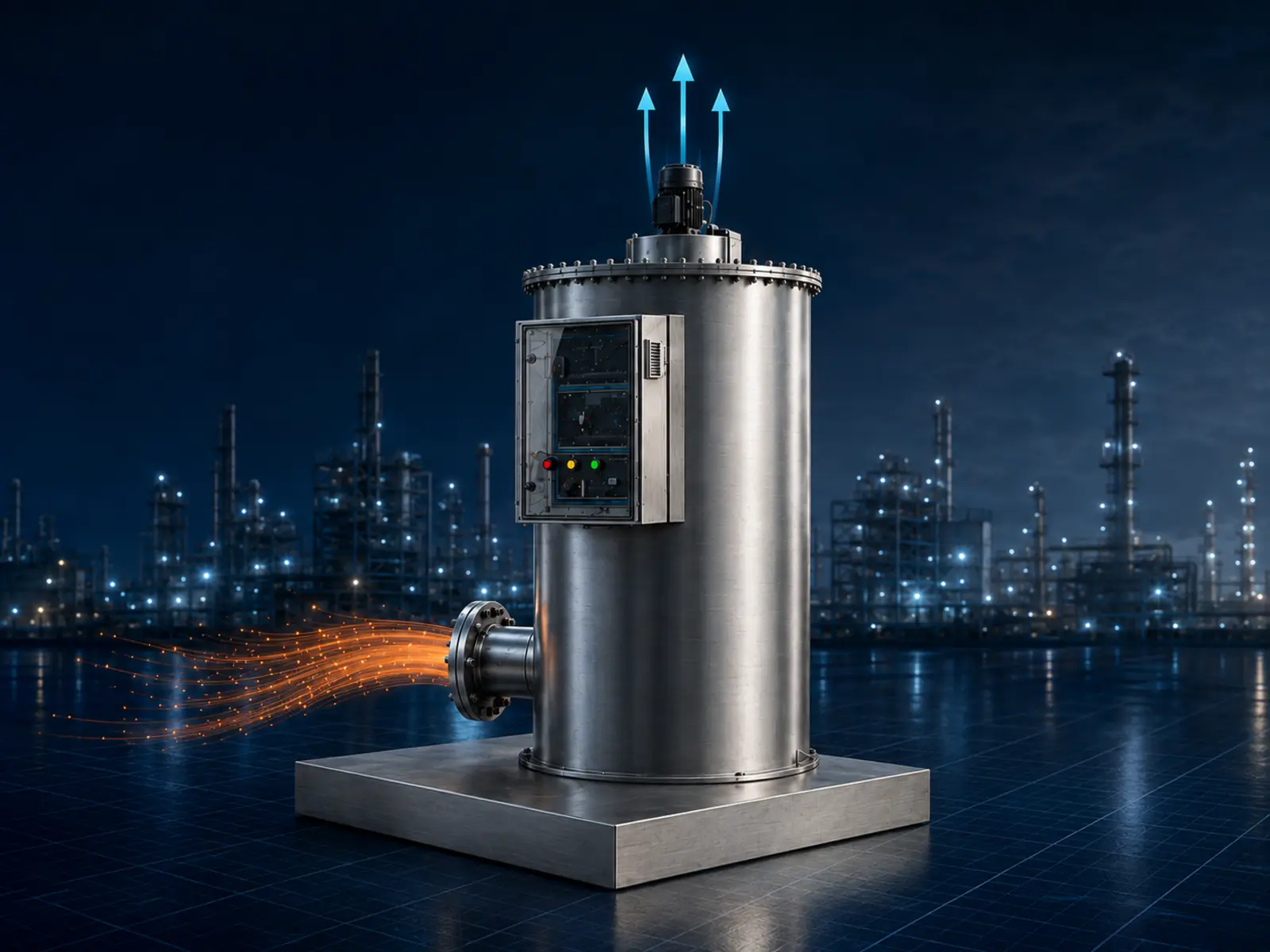
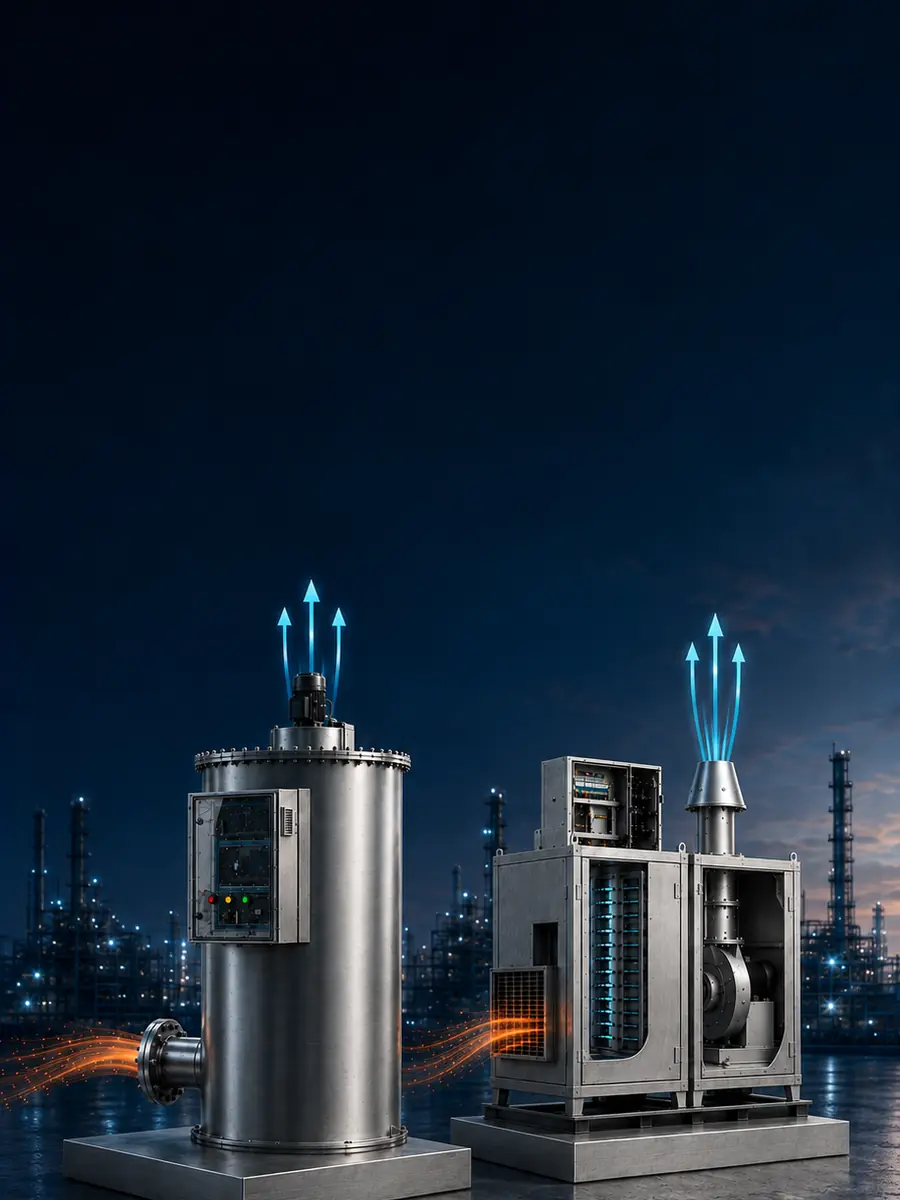
Engineering visualization of the ANBE FCA stainless-steel activated-carbon odor control vessel FCA / Activated carbon

System 01

Capture the compounds.
Keep the operation simple.

The FCA family draws contaminated air through a selected activated-carbon media bed. It is a robust, maintainable approach for hydrogen sulfide and organic odor compounds in wastewater and industrial service.

  • Standard airflow100–700 CFM
  • Extended reviewUp to 1,400 CFM
  • ConstructionSS304 / SS316 option
  • ControlManual or automatic
View FCA models

System 02

Transform the odor.
Treat the air continuously.

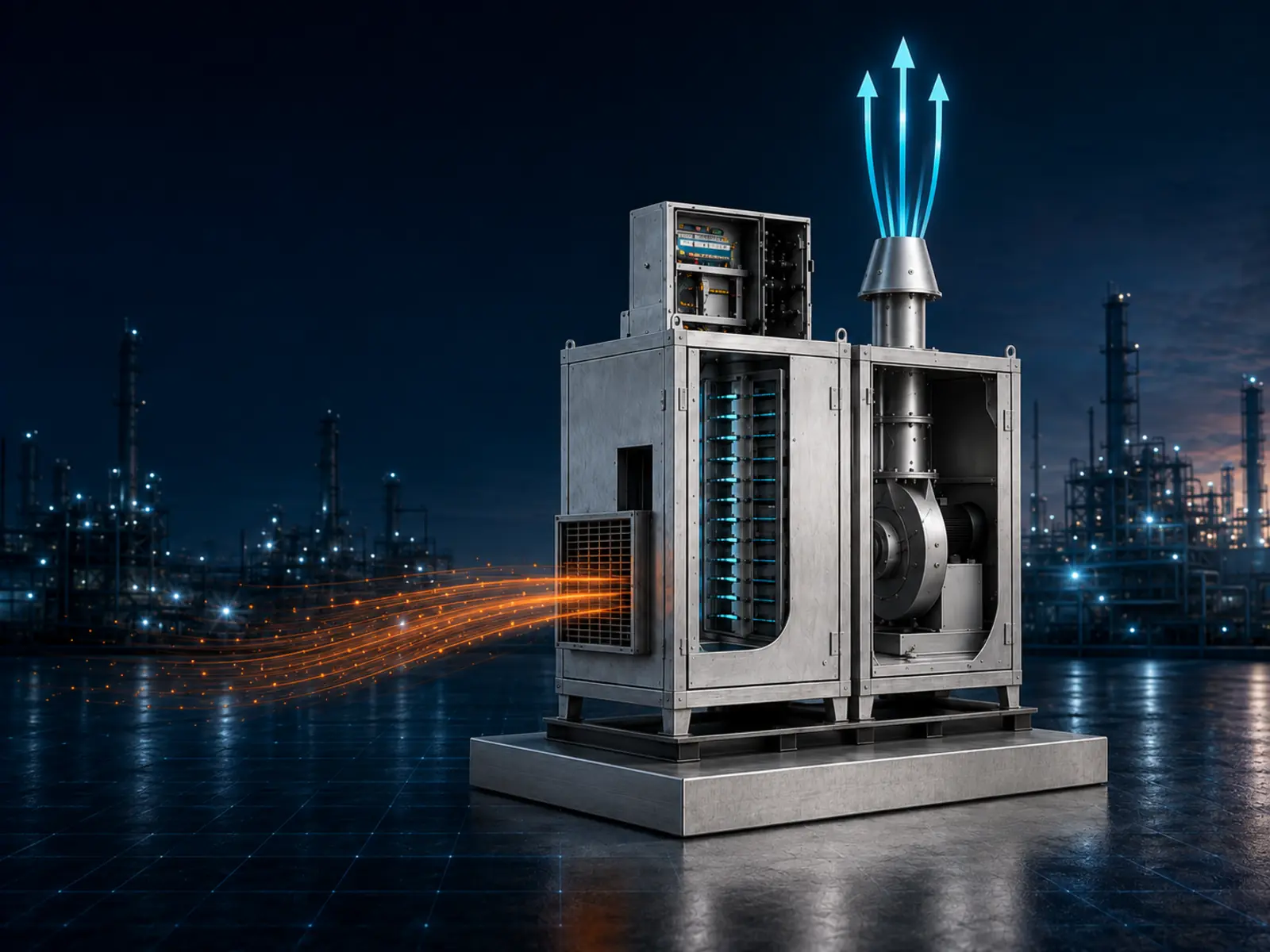
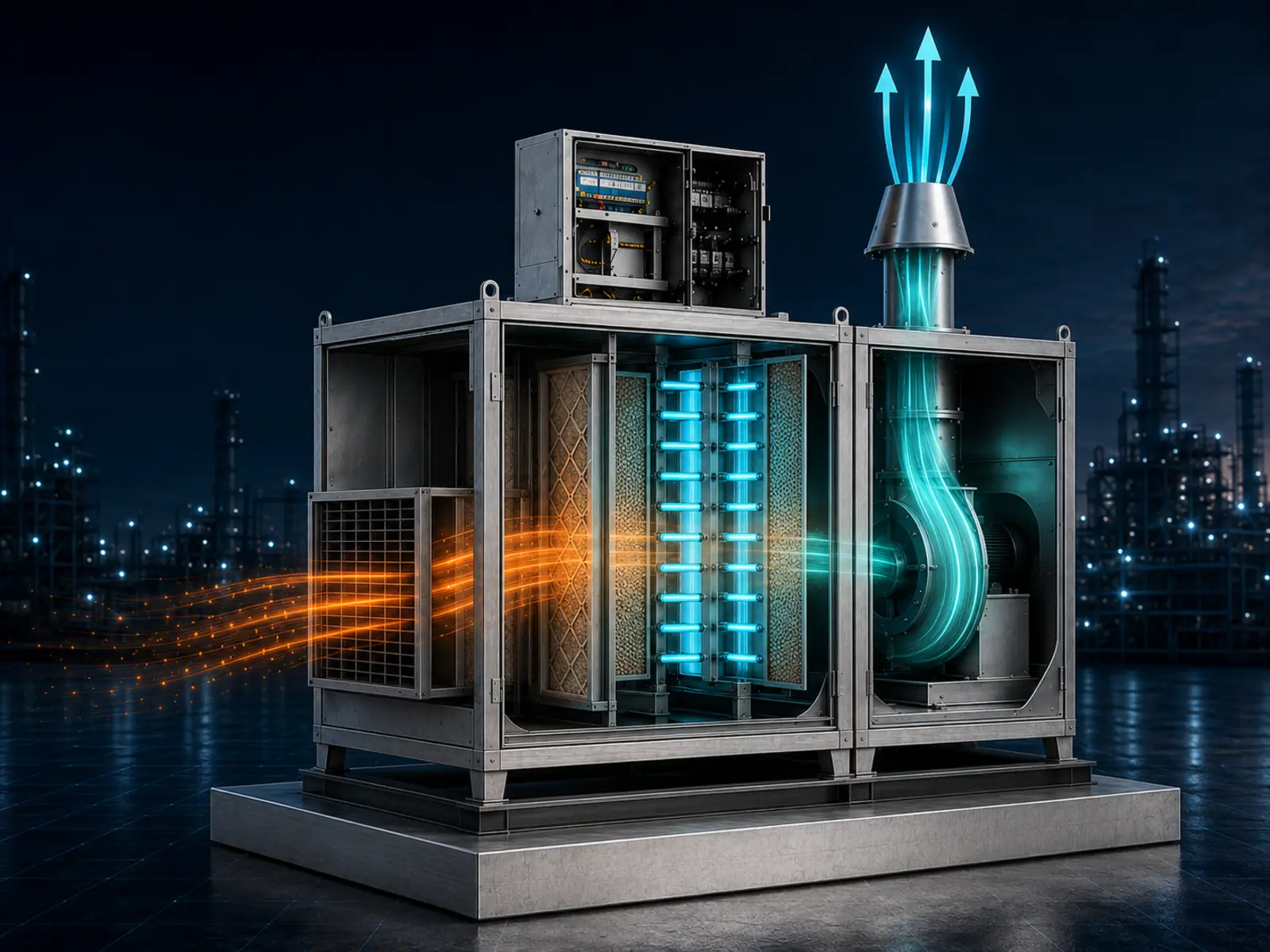
The DUV family combines UV-C irradiation and a nano-TiO₂ photocatalytic stage to oxidize hydrogen sulfide and volatile organic compounds, with an integrated prefilter protecting the treatment chamber.

  • Standard airflow500–2,500 CFM
  • Larger dutiesEngineering review
  • ConstructionSS304 / SS316 option
  • MonitoringOptional H₂S sensors
View DUV models
Engineering visualization of the ANBE DUV stainless-steel UV-C odor control system DUV / UV-C + nano-TiO₂

System finder

Start with the operating conditions.

Use this preliminary selector to identify a likely treatment pathway. Final sizing requires project data and ANBE engineering review.

i

This tool provides orientation, not a guaranteed equipment selection or performance commitment.

Inside the treatment

Different mechanisms.
A shared engineering discipline.

Explore how each system moves and treats contaminated air.

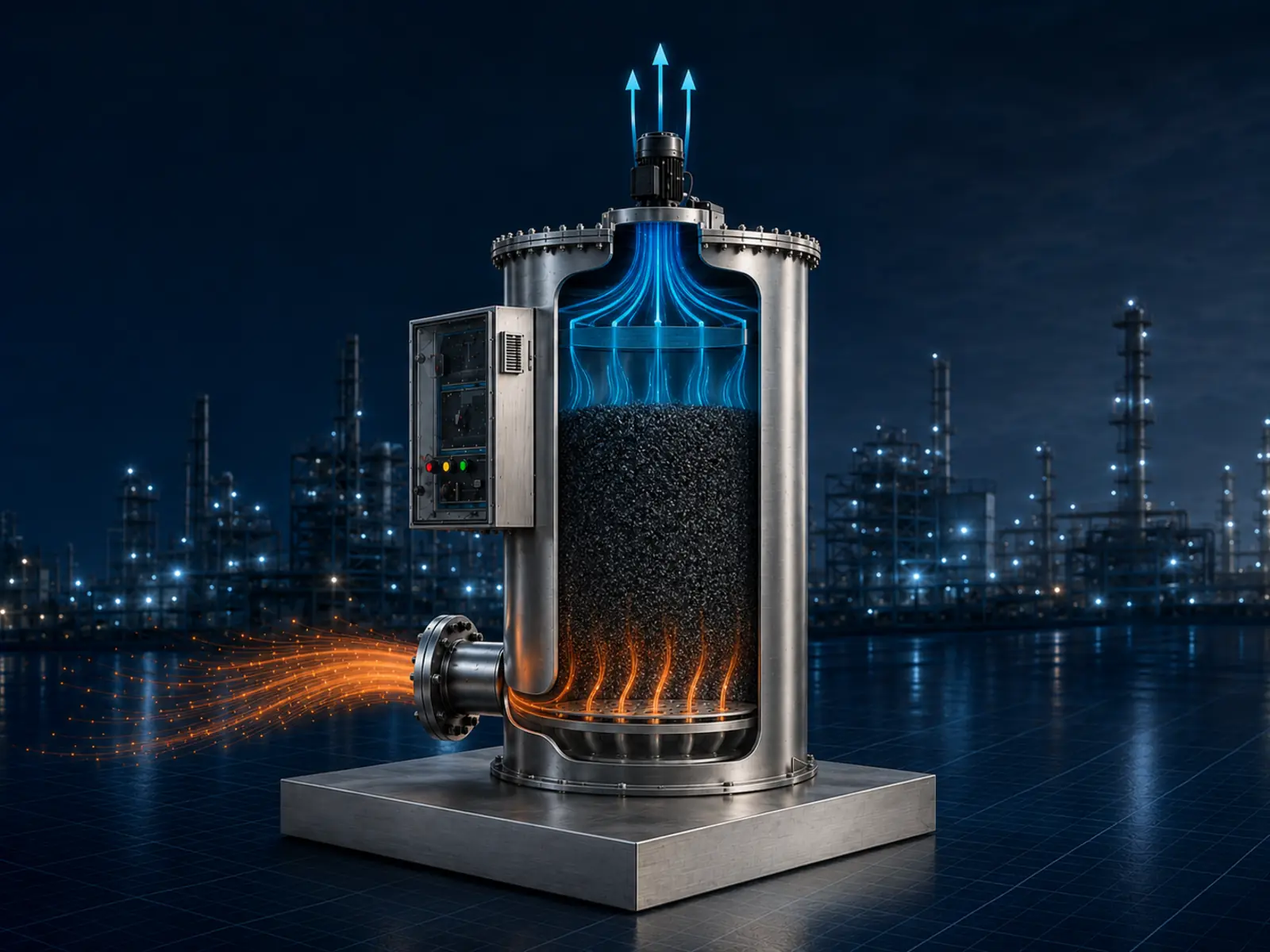
Cutaway visualization of contaminated air passing through the activated-carbon bed of an ANBE FCA vessel
  1. 01

    Capture

    The extraction fan conveys foul air from the contained source toward the vessel.

  2. 02

    Distribute

    Internal flow distribution promotes contact across the selected media bed.

  3. 03

    Adsorb

    Target compounds attach to the activated-carbon surface according to media selection and duty.

  4. 04

    Discharge

    Treated air exits the system; media condition is managed through the maintenance plan.

Model families

A defined range.
Configured for the site.

Published flows are standard product ranges. Actual selection depends on contaminant loading, contact requirements, pressure loss, layout and project-specific criteria.

01

FCA series

Activated-carbon adsorption

ModelAirflowCarbon media
FCA-100100 CFM159 lb
FCA-200120–200 CFM245 lb
FCA-250210–280 CFM442 lb
FCA-300290–400 CFM551 lb
FCA-350420–600 CFM750 lb
FCA-400620–700 CFM980 lb

Media type and bed configuration are selected for the target compounds and operating profile.

02

DUV series

UV-C + nano-TiO₂

ModelAirflowPower
ANBE-DUV-05-SS500 CFM2.4 kW
ANBE-DUV-10-SS1,000 CFM7.2 kW
ANBE-DUV-15-SS1,500 CFM10.8 kW
ANBE-DUV-20-SS2,000 CFM11.5 kW
ANBE-DUV-25-SS2,500 CFM12.6 kW

Lamp arrangement, prefiltration and monitoring options are defined during technical review.

Where we work

Designed for the places odor begins.

ANBE systems serve contained sources across wastewater infrastructure and selected industrial processes. Every application begins with source characterization.

01

Lift & pump stations

Air extraction from wet wells and enclosed pumping infrastructure.

02

Headworks & screening

Treatment near receiving, screening and preliminary process areas.

03

Tanks & process zones

Ventilation and odor control for enclosed liquid or sludge process sources.

04

Industrial process air

Project-specific review of organic odors, H₂S and mixed air streams.

Not sure how to define the source? We can begin with a short operating-data review.

Describe the application

Engineering workflow

From odor source
to operating system.

A disciplined selection process reduces assumptions and aligns the equipment with the conditions it will actually face.

Start the review
  1. 01

    Characterize

    Define source, airflow, contaminant profile, temperature, humidity, hours and variability.

    INPUT / OPERATING DATA
  2. 02

    Select

    Compare adsorption and photocatalytic oxidation against duty, access and maintenance priorities.

    DECISION / TREATMENT PATH
  3. 03

    Configure

    Establish material, fan, controls, media or lamp arrangement and monitoring options.

    OUTPUT / TECHNICAL PROPOSAL
  4. 04

    Integrate

    Coordinate connections, power, drainage where applicable, access clearances and plant interfaces.

    DELIVERY / SITE READINESS
  5. 05

    Support

    Plan commissioning checks, operating routines, consumables and preventive maintenance.

    LIFECYCLE / CONTINUITY

Built to be operated

Visibility where it matters.
Access where it is needed.

Control architecture and maintenance access are considered as part of the system—not as afterthoughts.

CONTROL

Manual or automatic operation

Operating modes are selected around site routines and the required level of automation.

INTEGRATION

Plant communication

FCA documentation provides for Modbus TCP / SCADA integration where included in project scope.

MONITORING

Optional H₂S sensing

Sensor configurations can support inlet/outlet visibility or media-condition planning, by model and scope.

MAINTENANCE

Service-oriented access

Filters, media, lamps and inspection points are incorporated for planned intervention.

Lifecycle support

The equipment is a milestone.
Reliable operation is the objective.

01

Application review

Technical alignment before selection and proposal.

02

Documentation

Operating and maintenance information for the supplied configuration.

03

Commissioning guidance

Startup checks and coordination within the agreed project scope.

04

Consumables planning

Media, filters and lamps organized around preventive maintenance.

Prepare your project

Better inputs.
Sharper decisions.

These are the operating data points that make an early technical conversation productive.

01

Airflow and source volume

Measured flow, ventilation target or source dimensions.

02

Contaminant profile

H₂S range, known VOCs, odor behavior and peak conditions.

03

Operating environment

Temperature, humidity, outdoor exposure, electrical supply and available footprint.

04

Site priorities

Automation, monitoring, maintenance access, materials and schedule.

ANBE Industrial

About ANBE

Industrial clarity.
Practical engineering.

ANBE Industrial develops odor-control equipment for demanding wastewater and industrial air applications, connecting treatment science with equipment that teams can operate and maintain.

Evidence before assumption

We begin with the source and operating conditions.

Configuration with purpose

Materials, controls and treatment stages follow the duty.

Support beyond delivery

Documentation and maintenance planning are part of the solution.

Technical FAQ

Questions worth asking early.

Need a project-specific answer? Send us the operating conditions.

How do I choose between FCA and DUV?+

Selection depends on contaminant type and concentration, airflow, variability, maintenance strategy and site constraints. Activated carbon is often a direct, robust route for H₂S and organic odors; DUV can suit larger or mixed duties where UV-C photocatalytic treatment aligns with the project. ANBE reviews the complete data before recommending a configuration.

What information is needed for sizing?+

Useful inputs include source volume or airflow, H₂S and VOC information, temperature, humidity, operating schedule, peak conditions, electrical supply, installation location and available footprint.

Can ANBE systems operate continuously?+

The documented FCA and DUV families are designed for S1 continuous duty when installed, operated and maintained in accordance with the supplied documentation and project conditions.

Are stainless-steel options available?+

SS304 is the standard documented construction, with SS316 available as an option where the project environment or specification requires it.

What maintenance should be anticipated?+

FCA systems require planned inspection and eventual media replacement based on loading and condition. DUV systems require prefilter care, UV lamp inspection/replacement and chamber maintenance. The project documentation defines the applicable routines.

Can the systems connect to plant controls?+

Control and monitoring scope is configured by project. FCA documentation supports manual/automatic modes and Modbus TCP / SCADA integration where specified. DUV monitoring options can include inlet and outlet H₂S sensing.

What safety provisions apply to DUV systems?+

UV-C treatment can generate ozone inside the reactor. Discharge ventilation, electrical isolation, interlocks, access control and any applicable H₂S/ozone checks must follow the supplied manual and the approved project plan; service should be performed by qualified personnel.

Project assessment

Tell us what
the air is carrying.

Share what you know. Unknown values are acceptable—we will identify the next useful step.

info@anbeind.com +1 786 920 0798 Miami, Florida · Supporting projects internationally
1Contact
2Project
Talk to engineering